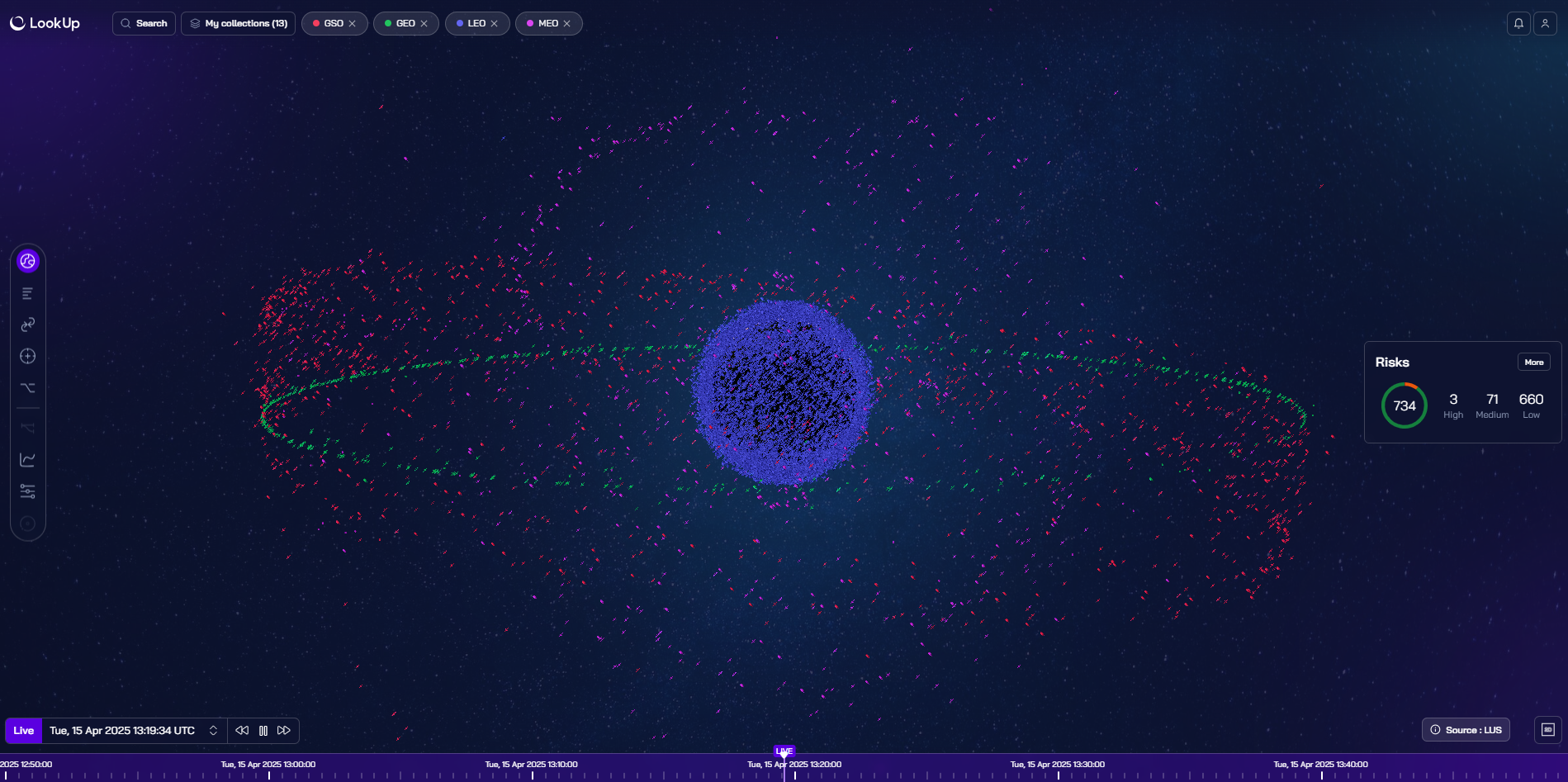





Earth Orbit passes 15,000 active satellites: Elon Musk's Starlink now controls two-thirds of the world's active satellite fleet
02
June
2026
Look Up – Le Point Quarterly Space Index (Q2 2026) (3rd Edition)
Highlights of the 3rd Space Index:
• The number of active satellites in orbit continues to grow, with 15,711 active satellites recorded, compared to 14,389 in the previous report three months ago
• In seven years, the number of active satellites has increased nearly eightfold: there were fewer than 2,000 satellites in service at the start of 2019
• Elon Musk’s Starlink constellation now has 10,365 active satellites, accounting for nearly 66% of the world’s active satellites, with nearly 3,320 new satellites deployed in one year
• China continues its rise with 1,286 active satellites, up from 1,025 a year ago, an increase of more than 25%
• The Chinese constellations Qian Fan and GuoWang are accelerating their deployment with 126 and 168 active satellites, respectively
• The European Eutelsat OneWeb constellation remains stable with 651 active satellites in orbit
Toulouse (France), June 1st 2026
Based on data collected and processed by its digital platform SYNAPSE, Look Up, a european company specializing in space situational awareness and operating a global network of space traffic surveillance radars, presents, in partnership with the French weekly magazine Le Point, the third edition of its Quarterly Space Index.
This new edition confirms the continued acceleration of the densification of low Earth orbit, driven primarily by U.S. megaconstellations, but also by the rapid rise of Chinese space capabilities.
An increasingly dense Earth orbit
With more than 15,700 active satellites now in orbit, the space environment continues to transform at a pace unprecedented in contemporary space history. In just a few years, low Earth orbit has become a strategic global infrastructure, essential for telecommunications, Earth observation, defense, and the digital economy. The total number of objects currently tracked in Earth orbit now exceeds 33,000, including active satellites, rocket stages, and cataloged space debris.
Starlink still largely dominates low Earth orbit
SpaceX’s Starlink constellation continues to drive global space traffic. With 10,365 active satellites, it now accounts for nearly two-thirds of the satellites currently in operation around Earth. This dominance illustrates the rise of private space infrastructure and the gradual transformation of low Earth orbit into a highly industrialized space.
China is accelerating its space deployment
The second major finding of the Index : the rapid acceleration of China’s orbital capabilities. China now has 1,286 active satellites, representing an increase of more than 25% in one year. This growth is driven in particular by the Qian Fan and GuoWang constellations, which aim for 12,000 and 13,000 satellites, respectively, in the long term. Beijing is thus confirming its desire to become a major player in global orbital infrastructure and to reduce its dependence on Western capabilities.
A more stable but lagging Europe
On the European side, the Eutelsat OneWeb constellation remains stable with 651 active satellites in orbit. No significant additional launches have been observed in recent months. This relative stability contrasts with the momentum in the U.S. and China, in a context where issues of space sovereignty are becoming increasingly central.
A mission of transparency and vigilance
Through this quarterly barometer, Look Up and Le Point aim to provide policymakers, industry leaders, the media, and the general public with a reliable snapshot of changes in Earth’s orbit. This initiative is part of Look Up’s mission: to contribute to a safer, more sustainable, and more transparent space through the development of European space surveillance and space traffic management capabilities.
About Look Up
Founded in 2022 by Michel Friedling, a former general in the Air and Space Force and the first Commander of the French Space Command, and Juan-Carlos Dolado Perez, former head of the Space Surveillance and Awareness (SSA) department at CNES, Look Up is a European company specializing in the safety, security, and sustainability of space activities.
Its solution is based on three technological pillars:
- SYNAPSE, a digital platform for the fusion and processing of orbital data
- SORASYS, a global network of space surveillance radars
- An integrated satellite operations management service
More information: www.lookupspace.com
Press Contacts
Image 7 :
- Stanislas de Saint Hippolyte - sdesainthippolyte@image7.fr – +33 6 25 16 04 07
- Charlotte Le Barbier - clebarbier@image7.fr - +33 6 78 37 27 60
Look Up : Isabelle Gariador - i.gariador@lookupspace.com – +33 6 16 98 81 02
What to read next
01
October
2026
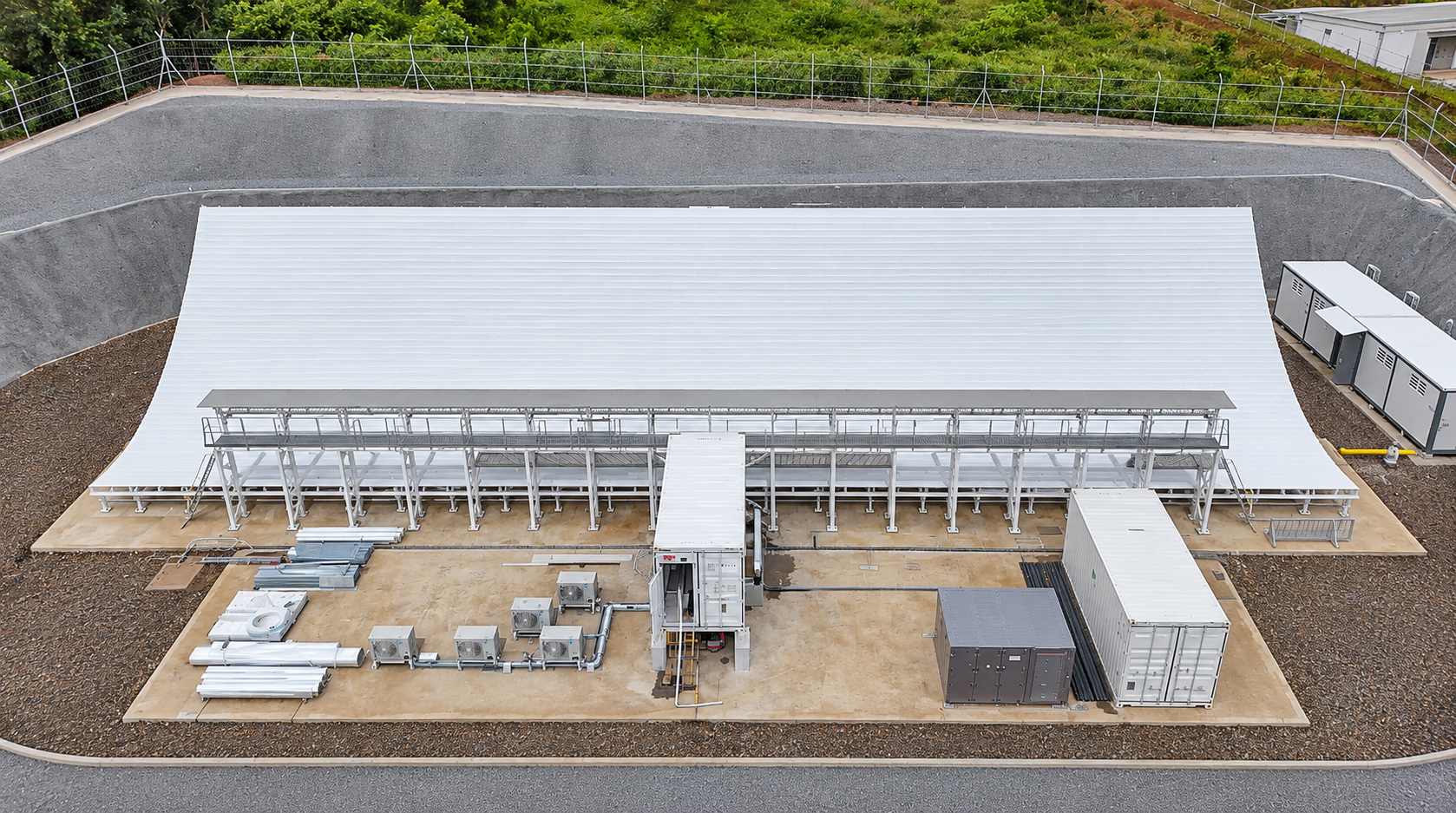
Look Up invests over €100 million in investment to build strategic space surveillance infrastructure in France’s overseas territories
With its first radar already operational in Lozère, the French company plans to deploy six radars across France’s overseas territories, including two in French Polynesia and one in Saint-Pierre-et-Miquelon, to establish a global space surveillance network.
.png)
11
September
2026
Building a sovereign Space Domain Awareness capability: A strategic necessity for Defence organizations
Why Space Domain Awareness (SDA) has become a critical priority for defence organizations, and how SORASYS ground-based radars and the SYNAPSE digital SDA platform can strengthen national sovereign capabilities in sensing, data processing, and analysis...