




Why monitoring space is critical, and how Look Up is building a safer orbital future
03
February
2026
When we look up at the sky, it might seem that space is vast, empty, and silent. In reality, the near-Earth space environment is becoming increasingly congested, contested, and vulnerable. This evolution matters to all of us, because modern societies now massively rely on space-based infrastructures for everyday services such as navigation, communications, weather forecasting, financial transactions, and emergency response. Any disruption or degradation of these systems would have direct and tangible consequences on our daily lives.
Monitoring space is therefore no longer a purely scientific endeavor; it is a strategic necessity for protecting critical infrastructure, ensuring economic resilience, and preserving the long-term sustainability of the space environment.
Here’s why and how our two technologies, SORASYS and SYNAPSE, are designed to tackle this challenge head-on.
The New Space race and its hidden threats
In just a few decades, the way we use space has radically changed. Since the launch of the first satellite, Sputnik, in 1957, the number of objects in orbit has grown exponentially. Today, over 30,000 space objects areactively tracked - including more than 14,000 active satellites, and millions of untracked debris pieces hurtle through space at incredible speeds. Active satellites, rocket remnants, collision fragments… Low Earth Orbit (LEO) has become a saturated highway.
And the trend is accelerating. With the rise of satellite mega-constellations and the democratisation of access to space, thousands of new objects are launched every year.
As the near-Earth space environment becomes increasingly congested, the need for high performance, reliable space surveillance systems has become absolute. Yet, unlike air traffic, there is still no global, standardised capability to observe, track, and manage orbital activity in near real time.
As a result, today’s observation and tracking capacities remain insufficient to cope with the scale, complexity, and dynamics of the orbital environment. This gap significantly increases the risk of collisions, satellite malfunctions, and cascading debris events — potentially triggering the so-called Kessler Syndrome — with consequences that could be long-lasting and difficult to reverse.
Why it matters down here on Earth
Satellites are critical for many different applications: weather forecasting, telecommunications, GPS navigation, financial transactions, disaster monitoring, and national security, forming the silent infrastructure that keeps our society functioning. A single collision in space can result in the loss of critical services, create thousands of new debris fragments, and increase the probability of further collisions.
Monitoring space is about protecting strategic assets, anticipating collision risks, preventing catastrophic events, and ensuring the sustainability of the orbital environment for future generations.
A mission rooted in responsibility: The role of Look Up to see, understand, anticipate, and monitor
This is when Look Up comes into play. Our mission: make space safer and more sustainable.
Our two cutting-edge technologies are at the core of this mission:
- SORASYS – our ground-based radar sensor network
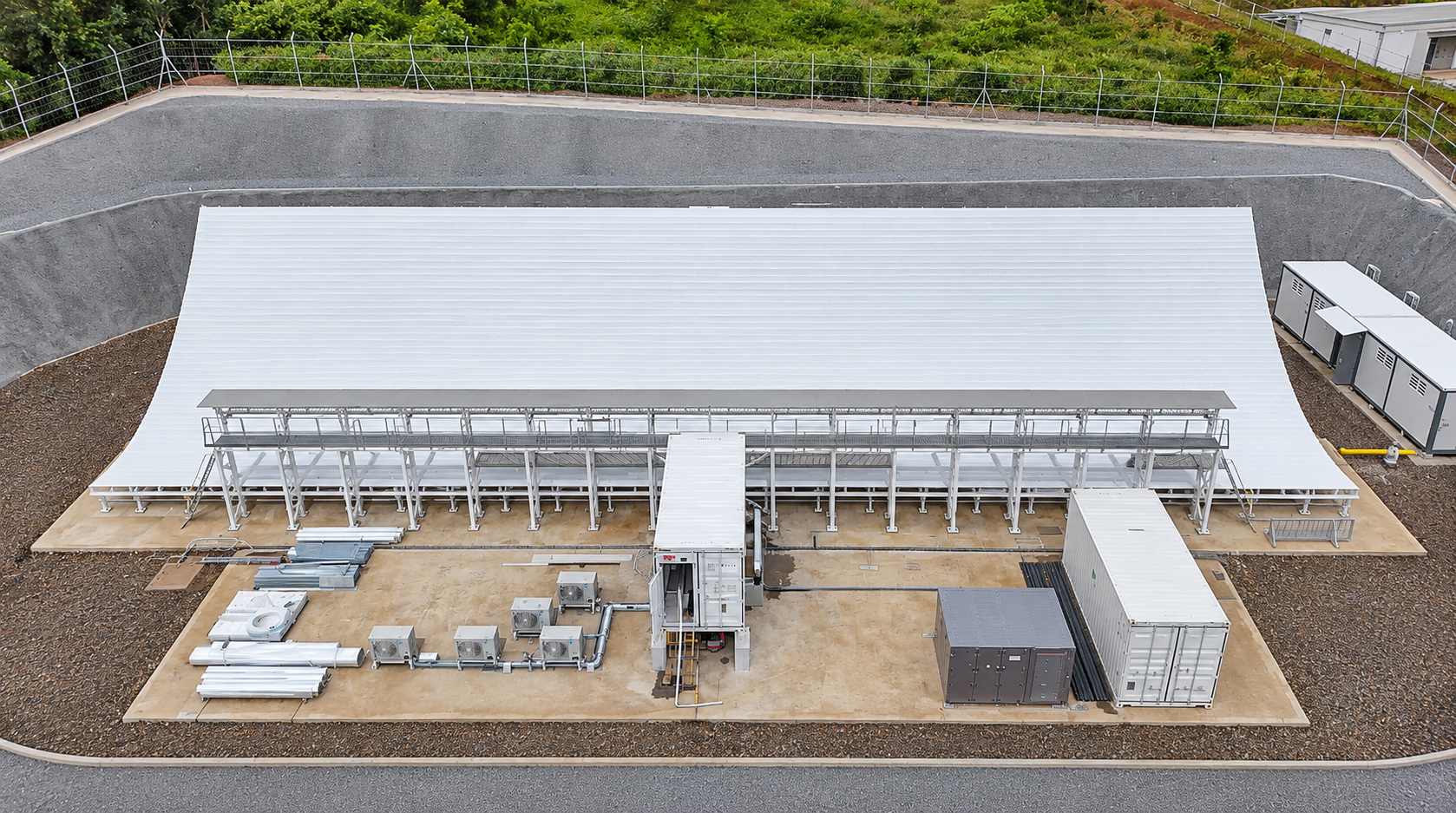
SORASYS is designed to track objects in Low Earth Orbit with unmatched resolution and revisit frequency. It’s a resilient and agile capability, providing high-quality, real-time tracking data.
- SYNAPSE – our Space Situational Awareness (SSA) digital platform
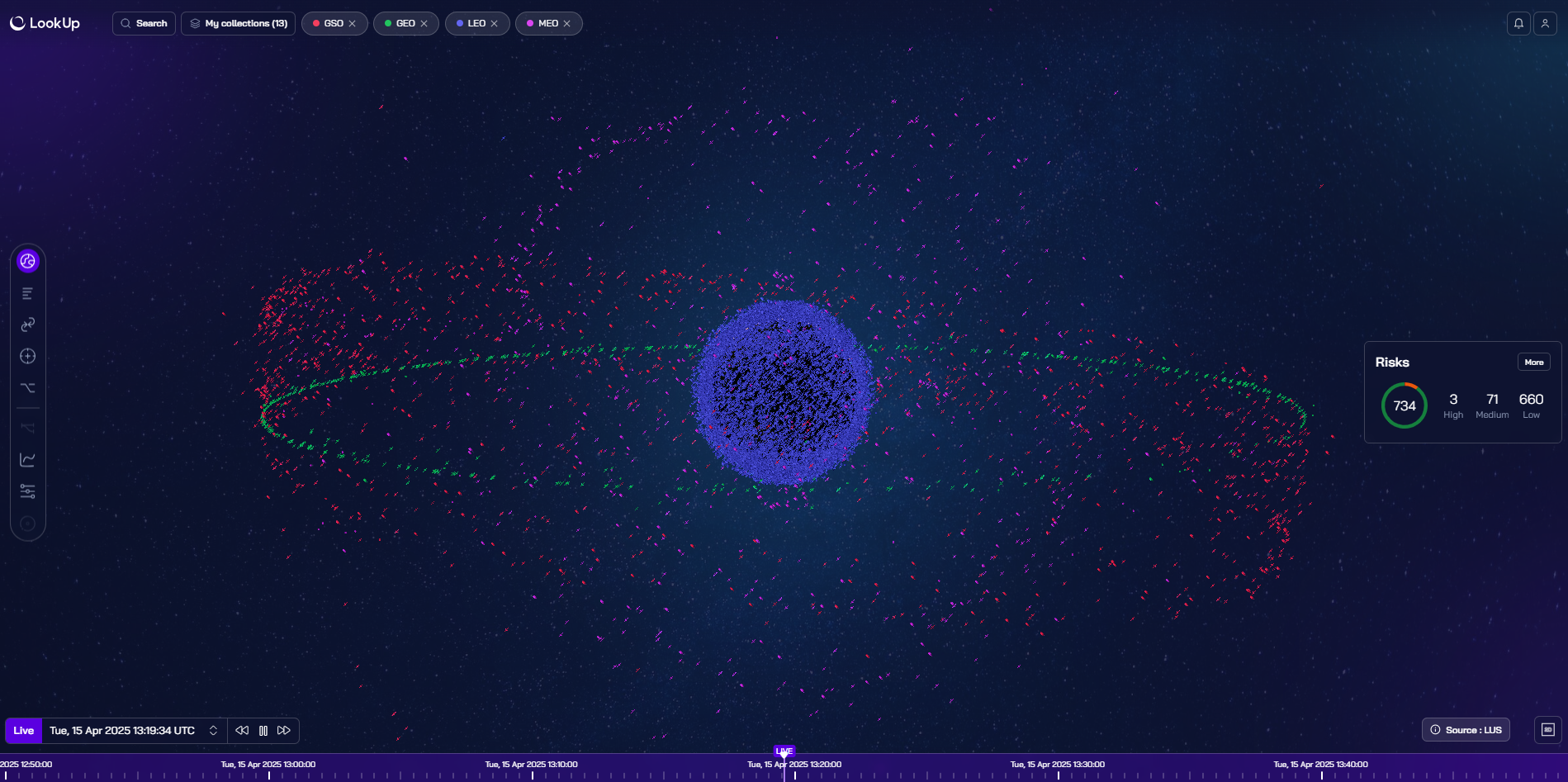
SYNAPSE, our digital platform, aggregates, processes and enhances space data at an unprecedented scale. With powerful multi-source data fusion capabilities, SYNAPSE provides a precise, near real-time view of the space environment. It enables users to predict risks, receive timely alerts and make informed decisions.
We recently published our Space Barometer in collaboration with Le Point. Explore the latest SYNAPSE insights, key data, and space trends in our press release here, and in the second edition published by Le Point here.
By combining autonomous, persistent and precise observations with cutting edge data processing, Look Up offers a comprehensive Space Situational Awareness (SSA) and Space Domain Awareness (SDA) solution for institutional, industrial and commercial actors to monitor, track, and protect satellites and space infrastructure from and increasingly congested and contested space environment.
At Look Up, we think that monitoring space is now a strategic, economic, and environmental necessity. Space is a shared, precious and non-renewable resource, requiring precision, collaboration and innovation to preserve it.
As we use to say, there is no sustainable Earth without a sustainable space.
What to read next
01
October
2026
Look Up invests over €100 million in investment to build strategic space surveillance infrastructure in France’s overseas territories
With its first radar already operational in Lozère, the French company plans to deploy six radars across France’s overseas territories, including two in French Polynesia and one in Saint-Pierre-et-Miquelon, to establish a global space surveillance network.
.png)
11
September
2026
Building a sovereign Space Domain Awareness capability: A strategic necessity for Defence organizations
Why Space Domain Awareness (SDA) has become a critical priority for defence organizations, and how SORASYS ground-based radars and the SYNAPSE digital SDA platform can strengthen national sovereign capabilities in sensing, data processing, and analysis...